
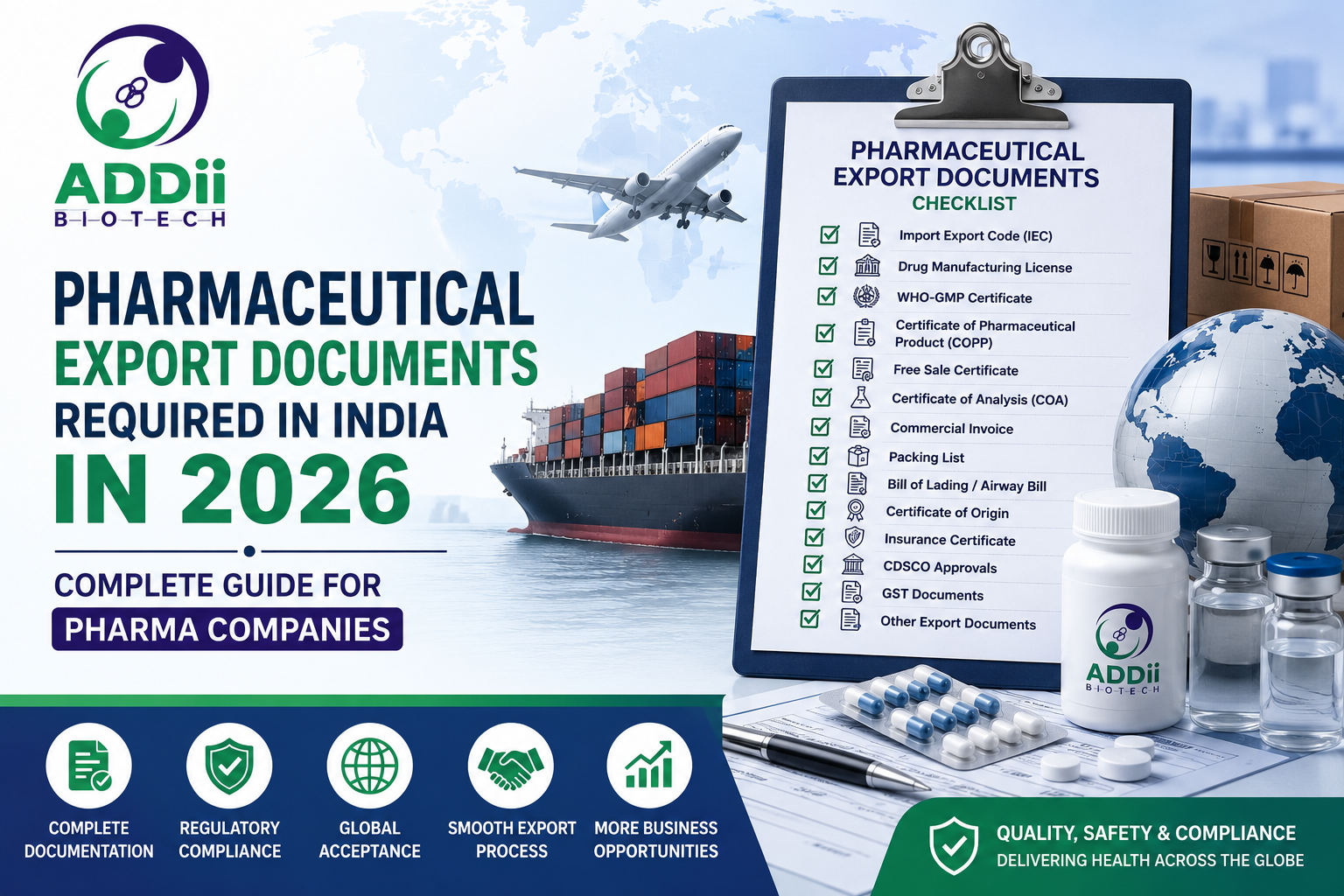
The Indian pharmaceutical industry has become one of the largest suppliers of medicines across the globe. Indian pharmaceutical companies export medicines, tablets, capsules, syrups, and healthcare products to more than 200 countries.
However, exporting pharmaceutical products is not as simple as shipping regular products. Medicines directly impact human health, which makes documentation and regulatory compliance extremely important.
If you are planning to export pharmaceutical products from India in 2026, understanding the Pharmaceutical Export documents is essential to ensure smooth international business operations.
This guide explains all the important documents required for pharmaceutical exports from India.
Why Documentation is Important in Pharmaceutical Export
Pharmaceutical products are highly regulated worldwide. Every importing country demands proper documentation to verify:
- Product quality
- Safety standards
- Manufacturing practices
- Product registration
- Regulatory compliance
Incorrect or missing documents can result in:
- Shipment delays
- Customs issues
- Product rejection
- Financial losses
- Legal complications
Therefore, maintaining accurate export documentation is essential.
1. Import Export Code (IEC)
The Import Export Code is issued by the Directorate General of Foreign Trade (DGFT).
Without an IEC, no company can legally export pharmaceutical products from India.
Purpose:
- Legal authorization for exports
- Customs clearance
- International trade transactions
Required Documents:
- PAN card
- GST certificate
- Bank details
- Company registration documents
2. Drug Manufacturing License
The manufacturing company must possess a valid drug manufacturing license issued by the State Drug Authority.
This document confirms that the company is authorized to manufacture pharmaceutical products.
3. WHO-GMP Certificate
WHO-GMP certification demonstrates that medicines are manufactured according to internationally accepted quality standards.
Many countries require WHO-GMP certification before allowing imports.
Benefits:
- Global acceptance
- Improved credibility
- Easier product registration
- Increased export opportunities
4. Certificate of Pharmaceutical Product (COPP)
COPP is one of the most important documents for pharmaceutical exports.
It is issued by the regulatory authority to certify that the product is approved for sale in the country of origin.
Importance:
- Product registration abroad
- International regulatory approval
- Buyer confidence
5. Product Registration Certificate
Several countries require product registration before importing medicines.
The registration process varies depending on the importing country.
Information generally required:
- Product composition
- Manufacturing details
- Stability data
- Label information
- Packaging details
6. Free Sale Certificate
This certificate confirms that the pharmaceutical product is freely sold within India.
Many international buyers ask for this document before importing products.
7. Certificate of Analysis (COA)
A Certificate of Analysis verifies product quality and laboratory test results.
It generally includes:
- Batch number
- Manufacturing date
- Expiry date
- Test results
- Quality specifications
8. Commercial Invoice
A commercial invoice contains important shipment details.
It includes:
- Buyer details
- Seller details
- Product information
- Quantity
- Price
- Payment terms
9. Packing List
The packing list provides complete information about:
- Number of cartons
- Product quantities
- Batch details
- Weight information
- Packaging specifications
10. Bill of Lading or Airway Bill
This document acts as proof of shipment.
For sea shipments:
- Bill of Lading
For air shipments:
- Airway Bill
11. Certificate of Origin
This document certifies that the products were manufactured in India.
It helps importers obtain customs benefits under trade agreements.
12. Insurance Certificate
Export insurance protects products against:
- Damage
- Theft
- Loss during transit
Insurance provides financial security to exporters.
13. GST Documents
Exporters must maintain proper GST documentation.
Required documents include:
- GST registration
- LUT or Bond
- Export invoices
14. CDSCO Permissions
Certain pharmaceutical products may require approvals from CDSCO.
Compliance with Indian drug regulations is essential before export.
Common Challenges in Pharma Export Documentation
- Changing regulations
- Country-specific requirements
- Product registration delays
- Missing certificates
- Incorrect documentation
Working with experienced regulatory professionals can simplify the export process.
Tips for Successful Pharmaceutical Export
- Maintain updated licenses.
- Follow WHO-GMP guidelines.
- Verify importing country requirements.
- Keep complete documentation.
- Conduct quality testing regularly.
- Work with experienced export consultants.
Why Documentation Matters for Global Pharma Business
Proper documentation helps pharmaceutical companies:
- Expand internationally
- Build buyer confidence
- Avoid shipment delays
- Maintain compliance
- Increase export opportunities
Strong documentation systems improve long-term business growth.
Conclusion
Pharmaceutical export from India offers significant business opportunities in 2026. However, proper documentation remains the foundation of successful international trade.
Documents such as IEC, WHO-GMP, COPP, COA, manufacturing licenses, and export certificates help ensure regulatory compliance and smooth customs clearance.
Companies that maintain complete documentation and quality standards can successfully expand into international markets and build long-term export relationships.
Frequently Asked Questions
Is IEC mandatory for pharmaceutical exports?
Yes, every exporter must obtain an Import Export Code.
What is COPP?
COPP is the Certificate of Pharmaceutical Product required by many importing countries.
Is WHO-GMP mandatory for exports?
Many countries strongly prefer WHO-GMP-certified manufacturers.
Who issues the Certificate of Origin?
Authorized chambers of commerce generally issue this certificate.
Why is COA important?
COA confirms the quality and specifications of pharmaceutical products.